
The Rorschach of Lead
In September 2020, Foreign Policy ran an essay "America Is About to Enter Its Years of Lead." The phrase was borrowed.
How Americans borrow Italy's terror years, each side reaching for the half that indicts the other
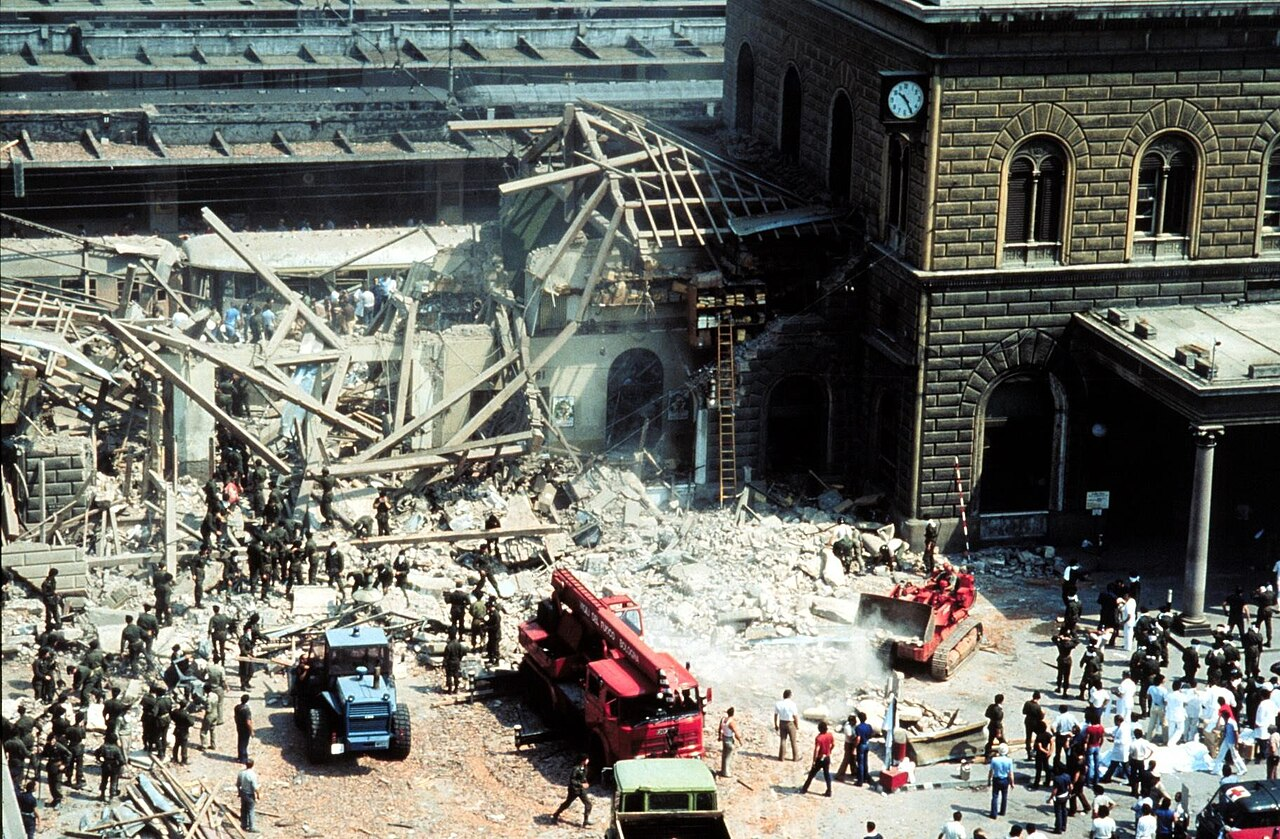
In September 2020, Foreign Policy ran an essay under the headline "America Is About to Enter Its Years of Lead." The phrase was borrowed. It names a stretch of Italian history, the anni di piombo, roughly 1969 to 1988, when bombings in banks and piazzas and on trains, and the kidnapping and murder of a former prime minister, killed several hundred people and left a democracy unsure how much of the bloodshed its own security services had abetted. The essay was not the first American reach for the analogy, and it has not been the last.
Since then the comparison has spread across the spectrum. Two criminologists built a peer-reviewed argument that Trump-era America was living through a "strategy of tension", the strategia della tensione, the Italian term for violence encouraged rather than suppressed; a university press office translated it under the title "Trumpism and the Italian Strategy of Tension." A former Justice Department counsel for domestic terrorism asked, soberly, what the Years of Lead can teach Americans. A 2025 dataset in the Journal of Peace Research mapped the Italian period as a case study in political violence in a polarized democracy. And at the far edge, a LaRouche publication read a present-day American assassination as a deliberate "strategy of tension" run by hidden hands.
The comparison now shapes how Americans argue about their own politics. It is worth asking what the history actually holds, and whether it can bear the weight each borrower puts on it.
What the Years of Lead actually were
Start with the record, because most of the borrowing depends on the reader not knowing it.
The Italian Years of Lead were genuinely two-sided, and the state was tangled in one side of them. On 12 December 1969 a bomb at a bank in Milan's Piazza Fontana killed seventeen people. Police first blamed anarchists; one, Giuseppe Pinelli, died in custody, and another was definitively cleared only years later. Italian courts eventually attributed the bombing to a cell of the neofascist group Ordine Nuovo, though by 2005 the men identified could no longer be convicted, having been acquitted earlier and shielded by double jeopardy; Italy's Court of Cassation confirmed those acquittals as final on 3 May 2005. Officers of the military intelligence service were convicted of obstructing the investigation. The deadliest attack came on 2 August 1980, when a bomb in the Bologna railway station killed eighty-five; neofascist militants were convicted for it, and a Masonic-lodge financier and an intelligence officer were convicted of diverting the inquiry. After decades of acquittals, Italy's high court in 2017 upheld life sentences for the 1974 bombing of an anti-fascist rally in Brescia, which killed eight.
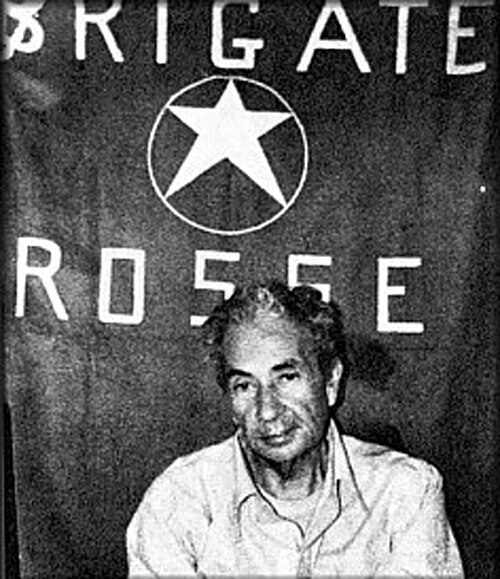
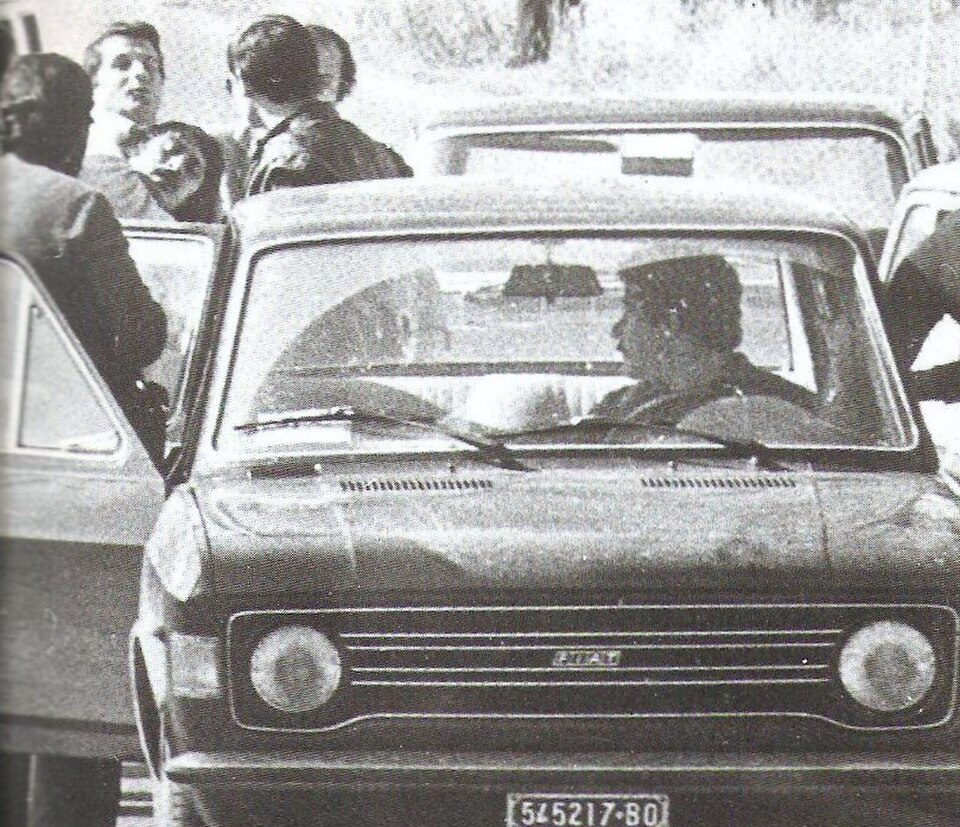
That is one side. The other was the revolutionary left. The Red Brigades, founded in 1970, kidnapped the Christian Democratic leader Aldo Moro in March 1978, killed his five bodyguards, held him fifty-five days, and left his body in a car in central Rome. The Red Brigades killed roughly seventy-five people over the period; far-left groups together killed around a hundred and ten. The single most famous act of the Years of Lead was theirs.
The state's entanglement is the part Americans reach for most, so it is worth being exact about what it was. After the Second World War, NATO helped build clandestine "stay-behind" networks across Western Europe, designed to organize sabotage and armed resistance if the Soviets ever invaded. Italy's was code-named Gladio. It was run with the Italian military intelligence services and the CIA, and it cached weapons and explosives around the country. Its existence was real, and for decades it was secret; Prime Minister Giulio Andreotti finally confirmed it to parliament in 1990 and named hundreds of participants. What the courts established is narrower than what the network's name now conjures. In the 1972 Peteano bombing, a magistrate proved a neofascist perpetrator, an official cover-up, and that the explosive matched a type stored in Gladio caches. In specific cases, at Piazza Fontana and Bologna, intelligence and security officials were convicted of obstructing the investigations. What no court or parliamentary commission established is the larger claim: that Gladio, as an institution, planned or directed the bombings, or that the CIA ordered a campaign of terror against Italian civilians. The most-cited English book asserting that thesis leans on a document, U.S. Army Field Manual 30-31B, that CIA officials told Congress under oath in 1980 was one of the most successful Soviet forgeries of the Cold War, replayed across multiple continents in Soviet propaganda. Scholars who have worked the Italian record treat the bombings-by-Gladio claim as an allegation that has never been confirmed.
Keeping those layers apart is what separates analysis from conspiracy theory. The honest record has four registers: what courts have established (the bombings, the perpetrators, specific cover-ups), what the state has acknowledged (Gladio existed), what is alleged but unproven (that the network ran the violence), and what is fabricated (the forged manual).
One more fact frames everything: scale. Across roughly two decades, the Years of Lead produced more than 7,800 recorded acts of political violence and several hundred deaths, carried out by organized clandestine armies with cadres, safehouses, and bomb-makers, inside a country with the largest Communist party in the West and a NATO frontier running through its politics. That is the measuring stick. Hold the American borrowings against it.
The asymmetry
The three borrowings are not mirror images of one another. What follows rests on the usages we surveyed, the prominent English-language invocations since 2020, not a systematic corpus.
When the academic and progressive left reaches for Italy, it reaches for the bombs and the state. The strategy of tension is its phrase, and the analogy points at the armed right and a security apparatus accused of looking away. The criminologists who coined the American usage describe state agents fostering fear to justify reaction, and map it onto the Trump-era right and the events of January 6. This is the half of Italy where the perpetrators were fascists and the state was compromised. Mainline liberals, when they reach abroad at all, tend to reach for Weimar rather than for Gladio. The historian Michael Brenner's "Are We in Weimar America?", published in the Jewish-American magazine Moment in February 2026, is characteristic: it runs the parallel at length and never mentions Italy. Brenner is one instance, in the same register as the Lake citation below, not a systematic count.
When center-right writers reach for a left-terror analogy, they have mostly not reached for Italy. Writing about the killing of a health-insurance executive, the journalist Eli Lake reached for the Baader-Meinhof gang and the glamour of "bourgeois terrorism", the German Red Army Faction, not the Italian Red Brigades. Lake is one instance, and there is an innocent reading of his choice: for a lone, educated assassin, the Baader-Meinhof story is arguably the tighter fit. The observation this essay rests on is the absence, not a motive. Italy offers the right a ready-made left-terror story in the Red Brigades and the Moro murder, and in the usages we surveyed no prominent right-of-center voice has taken it up. The likeliest explanation is worth stating as the inference it is: the Italian package comes bundled with the neofascist bombings and the compromised state, and the German one does not. The Red Army Faction is the cleaner brand. Whether that reading is right is testable, and we list the test below: if the asymmetry is an accident of news cycles rather than a preference, someone prominent on the right will eventually adopt the Red Brigades by name.
At the far edge, a third usage collapses the whole thing into "Gladio," the claim that a hidden Western network stages violence to this day. The word itself is the tell. The same LaRouche publication that read a 2025 American assassination as a "strategy of tension" attributed it to assets operating under NATO's Operation Gladio; "Gladio 3.0" circulates on conspiracy forums in the same spirit. At that point the word has stopped describing 1970s Italy and started naming a secret hand behind present-day events, an accusation built so that no evidence could refute it.
So the same historical episode is cited by the progressive left for its fascist bombings, avoided by the mainline right in favor of a German substitute, and converted by the populist fringe into a secret state. Each invocation takes the half of Italy that indicts the other side, and leaves out the half that implicates its own. In those usages, the left rarely mentions the Red Brigades, and the right rarely mentions that the era's signature atrocities were right-wing and that the state's hands were dirty in specific cases. Almost no one holds both at once.
One asymmetry of venue is worth naming rather than hiding. The left's strategy-of-tension reading reaches respectable and even peer-reviewed outlets, while its nearest mirror on the right, the hidden-hand "Gladio" claim, lives mostly in fringe ones. Where each argument finds a home is itself a finding about the discourse, not a thumb on our scale. The readings that hold both halves come from the academy and the institutional center, and they are worth taking seriously without being mistaken for a neutral vantage. The Journal of Peace Research dataset and the former terrorism prosecutor writing in The Hill treat Italy as a system under stress rather than as a weapon. That is a posture, not a view from nowhere, and the publication does not assume institutional consensus is automatically the trustworthy pole; this very subject is a catalog of institutions failing, from compromised security services to a forged manual to COINTELPRO. The narrower thing that can be said is that, on this question, a process-and-systems disposition produced the reading that holds both halves, while the partisan borrowings each keep one.
Where the analogy breaks
Each borrowing fails in the specific way its borrower needs it to succeed.
Begin with the claim a careful reader will challenge first, because the piece would not survive leaving it out. It would be wrong to say the United States has no organized political violence. It has it, on the left and the right. In 2020, federal agents broke up a plot to kidnap the governor of Michigan; the case became the right's clearest state-entanglement controversy as well as its clearest plot, because FBI informants and undercover agents were inside it, a first trial ended in acquittals for two defendants and a hung jury on the ringleaders, and it took a retrial to convict two of them of conspiracy. The militia groups that organized part of the January 6 Capitol attack, the Oath Keepers and the Proud Boys, had leaders convicted of seditious conspiracy after trials that documented staged weapons and months of preparation; the administration commuted their sentences in 2025 and had, as of early July 2026, moved to vacate the convictions, a motion the appeals court has not yet ruled on. On the left, a federal jury in Texas convicted nine members of what prosecutors called a North Texas antifa cell in March 2026 for an armed night attack on the Prairieland immigration detention facility the previous July, on charges of riot, providing material support to terrorists, and using explosives; the cell's leader, Benjamin Song, was convicted of the attempted murder of a responding police officer, whom he shot and wounded. The defense argued Song fired to suppress rather than to kill, after the officer drew; the jury convicted. Seven others had pleaded guilty to providing material support before the trial. In late June and early July 2026 the defendants were sentenced to terms running from under two years, for cooperating defendants, to one hundred for Song; appeals are filed and state charges are pending, so the verdicts are findings under review, not the end of the case. And in June the Justice Department indicted fifteen members and associates of a Minneapolis group it describes as having antifa ties, charging conspiracy to impede federal officers, stalking, assault, and destruction of property; those charges are allegations, the defendants have pleaded not guilty, and they are presumed innocent. Organization is not in serious doubt on either side.
A word on method, since this essay is skeptical of borrowing from the news. The American cases above sit at different stages, and we use each accordingly. The Texas convictions are jury findings, tested at a contested trial and now on appeal; we treat them as established while naming what remains open. The Minneapolis charges are weeks old and untested; we use them the way we would ask anyone to use a fresh event: named, dated, sourced to the indictment, and flagged as allegations to be tested in court. Citing recent events is not the failure this piece describes. Citing them selectively, and treating an accusation as the verdict it has not received, is.
But differences of kind remain, and fairness means naming them rather than forcing a match. The right's organized violence in these years has run to lethal plots against officials and to groups that acted in a single mass event at the Capitol. The left's, on the Texas jury's findings, has now run to an armed attack on a detention facility, planned in encrypted chats, staged with rifles and body armor, in which the cell's leader shot and wounded a police officer. The comparison is scoped to organized groups, deliberately: the wider ledgers of American political violence are dominated by lone-actor attacks that sit outside the organized-form question this essay asks, and on those ledgers federal threat assessments have repeatedly rated right-wing and racially motivated violence the deadlier category: the FBI and DHS's own 2021 joint report to Congress assessed, with high confidence, that racially or ethnically motivated violent extremists, primarily those advocating white-race superiority, were "the most lethal domestic violent extremist threat to the Homeland" as of 2019. Within the organized frame, the Texas verdict matters, and it is worth being plain about what it changed: it is no longer accurate to say organized violence on the American left stops at property damage and the obstruction of officers, a description that was defensible before the Texas trial and is not after it. These still are not the same act in two uniforms, and a publication that flattened them into one undifferentiated "both sides" would be committing the distortion this one exists to catch. What they share is the ceiling. None of it, on either side, is the Red Brigades.
The Italian groups were standing clandestine organizations that kidnapped, kneecapped, and bombed across two decades and left several hundred people dead. Nothing in the United States approaches that scale, that lethality, that duration, or that clandestine-army form. A kidnapping plot foiled at the planning stage, a riot at the Capitol, and a one-night attack that wounded one officer are serious. They are not a twenty-year war fought by armed undergrounds.
The analogy breaks next on structure. The strategy of tension had its logic in the Cold War: a NATO state with the largest Communist party in the West, a genuine prospect of the left entering government, and a real stay-behind apparatus built for that fear. Remove the superpower contest and the mass revolutionary party, and the engine that drove the Italian violence is simply gone. The United States has neither.
It breaks hardest on the state-collusion claim that is the analogy's center of gravity, and here the discipline has to cut in both directions. One reading, urged by parts of the populist right and by national-conservative critics of the security state, holds that organized left violence is tolerated or quietly enabled by sympathetic institutions, an antifa that functions like a friendly Gladio. Stated in its strongest form, that is a claim about the years before 2025, about local prosecutors, universities, and media treating left-coded violence more gently than right-coded violence; it is not a claim about the administration now in office, which is prosecuting antifa and has designated it. The mirror reading, available to civil libertarians and urged by parts of the left, holds that the current federal crackdown, including the still-unproven Minneapolis indictment and the executive initiative behind it, is the same play in reverse, the state magnifying a threat to justify expanded power. Both are claims of state collusion, and neither has been established in any of the four registers.
The Texas case now sits between those readings, and each side can take it as confirmation. To the first it reads as vindication: terrorism convictions of antifa-aligned defendants arrived only under an administration willing to name the target, which is taken as proof of the earlier indulgence, though taking it that way requires evidence about the earlier years that the verdict itself does not supply. To the second it reads as exhibit: sentences running to a century, announced by the government as the first handed down since the executive designation of antifa as a domestic terrorist organization, are exactly what the overreach reading will cite. Two facts should discipline both. The designation is an executive label with no statutory mechanism behind it, and the convictions rest on ordinary criminal statutes, riot, material support, explosives, attempted murder, that carry these penalties with or without the label. And there is a third reading available, the institutionalist one, which fits the visible record at least as well: an attack, an investigation, a contested trial, a jury verdict, appeals now filed, which is what the process looks like when it is working. Whether the verdicts and sentences stand as justice or as excess is what the appeals will test. No one's collusion story is established by a case the courts are still deciding.

The serious civil-libertarian version of the worry, though, does not depend on the conspiracist one, and it is the part of the analogy that travels best. Set aside whether any single indictment or verdict is sound. The sharp form of the worry is already visible in the Texas record: material support to terrorists is a charge whose reach depends on how the organization is defined, the defense argued there was no organization to support, only an ideology, and the seven defendants who pleaded guilty to support rather than to violence are where a guilt-by-association question would be asked first. The durable thing is the machinery. A standing federal apparatus pointed at a named political tendency tends to outlast the case that built it, whatever the verdict, and Italy is a real lesson in that: the response to its terror years produced emergency powers and habits of surveillance that long outlived the emergency. The machinery has checks of its own, the appeals now running among them, and an honest account holds both: review is real, and so is the record of what persists after review is done. So the honest position is the one the record teaches case by case, by evidence rather than analogy. State misconduct around political violence is real and has happened; the deeper danger is less the single frame-up than the apparatus that, once built, persists and gets turned to new targets.
What's clear, what's contested, what's missing
Clear. The Years of Lead were two-sided. Neofascist bombings with proven cover-ups, and far-left kidnappings and killings, ran at the same time. The deadliest attacks were right-wing; the most famous was left-wing. A NATO stay-behind network, Gladio, existed and was officially admitted. Organized political violence exists in the United States today, on the left and the right: courts have convicted organized groups on the right of seditious conspiracy and a kidnapping plot, and a jury has convicted an organized cell on the left of an armed attack on a detention facility. It differs between the sides in form and target, and it differs from the Italian case in scale, duration, and kind.
Contested. Whether the Italian state, NATO, or the United States directed a campaign of terror, as opposed to abetting specific cover-ups, remains unproven after decades of inquiry. Whether antifa is best described as an organization or a movement is contested, and the answer has shifted with the politics of the moment; the Texas verdicts settle what those defendants did on one night, not the category question, which the defense contested at trial and the appeals may reach. Whether the Texas sentences, running to a century, are proportionate justice or the overreach the civil-libertarian reading warns of is contested along exactly the lines this essay maps. Whether the current American crackdown as a whole is a proportionate response or an expansion of state power is the question now being fought over, and it is not settled by reaching for Italy.
Missing. A clean number for the American present that would make the comparison precise. Cross-era counts of "political violence" depend heavily on what gets counted, and the honest answer is that the American figure is rising from a low base and is not measured the way Italy's was. Anyone who tells you the two are quantitatively alike is guessing.
Where the incentives point
The analogy travels because the route rewards travel. For commentary, a foreign precedent imports gravity and a civil-war frame imports clicks; "America's Years of Lead" is a more shareable sentence than "American political violence is rising from a low base." We note this as a structural pull, not an accusation against any particular writer, since the sober institutional uses exist alongside the alarmist ones. For movements on both sides, framing the opponent as terroristic, or the state as complicit, raises the stakes that drive donations and recruitment. For officeholders, the same act can be a reason to prosecute or a reason to pardon, depending on whose supporters committed it. The countervailing pull comes from the academy, where the reward runs toward caution: the 2025 dataset's contribution is partly an argument against calling the Italian era simple "terrorism" at all. At the fringe, the "Gladio" frame is maximally retentive precisely because it absorbs every new event into one hidden explanation, which is a business model as much as a belief.
How the analogy has traveled
Historical analogies have careers, and this one's is instructive. The Italian comparison entered American argument from the academic left around 2020, attached to the strategy-of-tension reading, and it has since fanned outward: into mainstream opinion, into a sober institutional literature that resists it, and into a conspiracist tail that weaponizes it. The striking move across that whole arc is not adoption but selection. No faction has imported the Years of Lead whole. Each has imported the half that serves it.
The diagnostic verdict is that the American use of the Years of Lead is a selective-memory event, not a structural parallel. The analogy is not traveling because the United States is becoming 1970s Italy. It is traveling because "Italy" has become a shared proper noun that lets incompatible claims about America borrow the authority of history. When both sides cite the same country and mean opposite things by it, that is not common ground. It is parallel monologue.
The mirror in the hallway
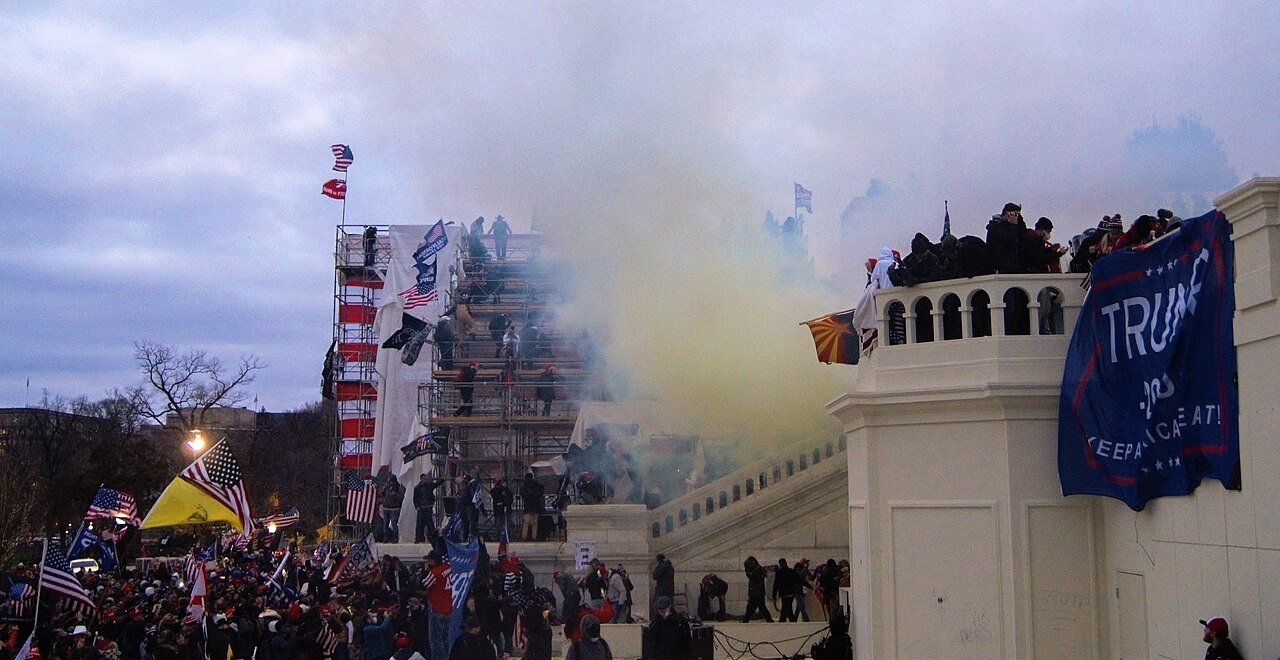
There is a stranger fact underneath all of this. To find a society convulsed by multi-directional political violence and a security state that broke its own rules in response, Americans do not need to cross the Atlantic. They can look at their own recent past.
In the early 1970s the United States had its own bombing years. The Weather Underground bombed the U.S. Capitol in 1971 and the Pentagon in 1972, and the FBI classified it as a domestic terror group. It was not alone: the Black Liberation Army, the Puerto Rican FALN, the Symbionese Liberation Army and others ran alongside it, and the era produced hundreds of bombings and a string of killings. The state's response supplied the other half of the Italian story. The FBI's COINTELPRO program of surveillance, infiltration, and dirty tricks against domestic political groups, later documented and condemned by the Senate's Church Committee, is the closest American analogue to the security-service misconduct the strategy-of-tension reading wants to find. It is also the clearest proof of the lesson above: COINTELPRO outlived the radicals it was built to fight, and the surveillance powers assembled in those years were turned, again and again, to new targets.
That history is the better mirror, and it is the one almost no one reaches for. The left prefers Italy's fascist bombings to its own movement's bombing years. The right prefers Germany's Red Army Faction to the American radicals who actually set off the bombs here, and seldom dwells on COINTELPRO. Both reach across an ocean for a borrowed reflection and walk past the one in the hallway. A reader who wants to think seriously about political violence and the state would do better to start at home, where the record is fuller, the sourcing is in English, and the analogy does not have to be smuggled across a border to work.
What to watch next
- Whether new American commentary invoking the "strategy of tension" cites specific Italian court findings, or floats the term with no anchor. The presence or absence of an actual citation is the cleanest tell of which register a writer is in.
- Whether any prominent voice on the American right adopts the Italian Red Brigades by name, rather than the German Red Army Faction. That is the test of the inference above: if the substitution is preference rather than accident, the asymmetry will hold; if it closes, we said so here first and will say so again.
- How the Minneapolis prosecution resolves, and whether the charges are proven in court; the defendants pleaded not guilty on 1 July. The gap between an indictment and a conviction is where many of these arguments are won or lost, and the Texas case has now crossed it once: indictment to conviction to century-scale sentences inside a year.
- How the Texas case fares on review: whether the Fifth Circuit sustains the verdicts and sentences, how the pending state terrorism charges resolve, and whether commentary treats the convictions as findings about fifteen defendants or as proof about a movement. Each side's handling of that distinction will be a live sample of the selective borrowing this essay describes.
- Whether "Operation Gladio" migrates from fringe outlets into mainstream argument. That migration would mark a real degradation in the discourse, not merely a stylistic one.
- Whether the American radical 1970s, the Weather Underground and COINTELPRO, gains ground as the reference point over the European analogies.
- The analogy will intensify around any high-salience act of American political violence, with each side reaching for its accustomed half. The timing is unknowable; the pattern is not.
About this analysis
As of: 7 July 2026. The Prairieland (Texas) defendants discussed here were convicted in March 2026 and sentenced between 23 June and early July 2026; appeals to the Fifth Circuit are filed and state charges are pending. The Minneapolis indictment was unsealed on 16 June 2026, and the defendants pleaded not guilty on 1 July. The January 6 vacatur motion remained pending before the appeals court. All are live, and this analysis will be updated as they proceed.
Method: Produced using the civic-intelligence method described at our methods page. This piece drew most heavily on the verified-record, competing-narratives, distortion-audit, incentives, and historical-lineage stages of that method.
Historical lineage: Included, because the entire subject is a claim about historical continuity; the analysis treats that claim as the thing to be tested.
Funding: The Cairn Review is free to read, non-commercial, and carries no advertising, sponsorship, or outside funding. If you find analysis like this valuable, you can subscribe, free, to receive new issues.
Conflicts of interest: Conflicts page. None bearing on this issue.
Corrections: corrections policy.
To cite or republish: citation & republication policy.